Notes from the Head: Thoughts on education, character and growing up…


Co-Education at Freemen’s: A Tradition Since 1854
At Freemen’s, co-education has never been an aspiration: it has always been our reality. Part of this is a quirk of our Foundation of course. When the City -and Warren Stormes Hale – decided to plan for a different future for the orphaned children that were being looked after in the square mile, there were boys and girls. Therefore, when the Act of Parliament was put through in 1850 it was to propose an institution for boys and girls, The City of London Freemen’s Orphan School. For those of you with an interest in history, the Act can be found, here.
So, since our foundation in 1854, City of London Freemen’s School (we dropped the ‘orphan’ when we moved to Ashtead 100 years ago) has educated boys and girls side by side. From our early years in Brixton to our present home in Ashtead, this has remained a defining feature of the school. Co-education is not a recent development or response to educational fashion or financial imperatives; it makes up our DNA as an institution, and is something we have continually refined as education and society have evolved. Form 1 who spend some time with me in the archives each year are rightly appalled that in Brixton, while the boys played, the girls were expected to do chores and we all reflect on how right it is that times have changed!
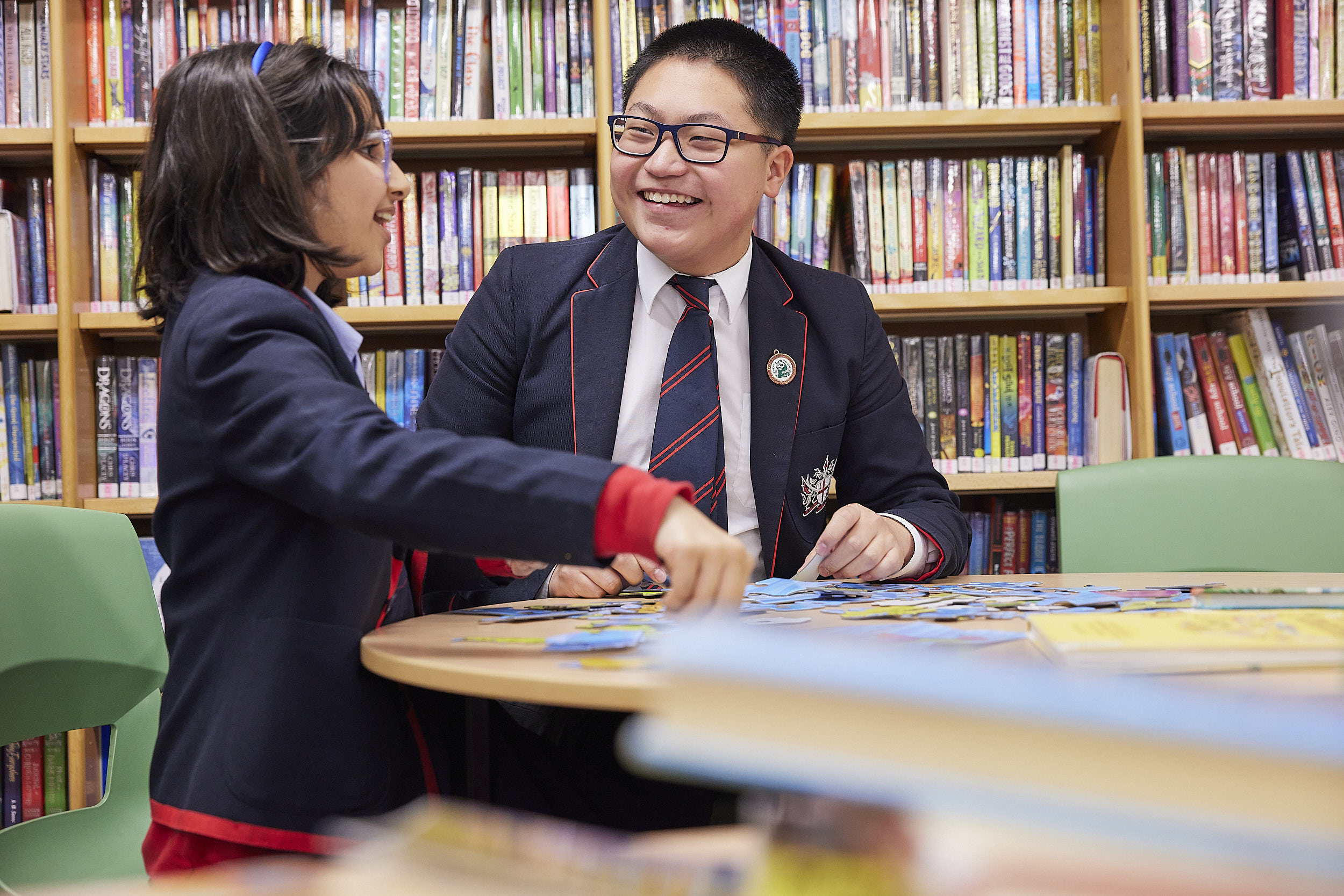
Today, that long-standing commitment reflects a simple belief: pupils learn best when they learn together, and education should prepare young people for the world as it truly is. This reflects a broader shift in independent education, with co-education now the norm across the sector. Increasingly, schools recognise the value of learning environments that mirror modern universities, workplaces, and wider society. In essence, we don’t live in a single-sex world so why would we want our children to be educated in one? And yes, I appreciate that there is an irony in my having spent 13 years of my life teaching in one of the most famous single-sex schools in the world, but I have spent 15 years since leading co-educational schools. And I wouldn’t go back!
In the classroom, co-education brings a breadth of perspectives that enrich discussion and deepen understanding. When pupils encounter different viewpoints, they learn to listen, to question, and to think more critically. Conversations become more dynamic, ideas more considered, and learning more reflective of life beyond school.
We see this every day. Co-educational classes encourage pupils to challenge and support one another, developing confidence in their own thinking while remaining open to the ideas of others. These are habits that serve them well – not only in examinations, but in university, in the workplace, and in life.
Co-education also plays an important role in broadening horizons. When boys and girls learn alongside one another from an early age, subject choices and ambitions are driven by interest and ability rather than expectation or stereotype. Over time, this creates a culture in which pupils feel free to pursue their passions – whether in science, sport, the arts, or leadership. Confidence grows not from comparison, but from opportunity, and from knowing there is no predetermined path.
Education is about more than academic success. Many of you have heard me say that before and I won’t stop saying it because it is a fact! It is also about -0 among other things – learning how to live and work alongside others with empathy, respect, and understanding.
From their earliest years at Freemen’s, pupils build friendships across genders naturally and comfortably. They learn how to communicate clearly, collaborate effectively, and navigate differences thoughtfully. These interpersonal skills are just as important as academic ones, and they underpin the confidence and emotional intelligence we want every young person to develop. We take this responsibility seriously, ensuring that pupils feel safe, respected, and able to engage fully in school life. Through our pastoral systems, PSHE programme, and wider co-curricular provision, we actively promote respectful relationships, emotional intelligence, and inclusion.
Along the way, there are children who get this wrong and that is part of the journey: none of us are perfect and none of us have perfect children; our responsibility is to support them when things go wrong and help them to make better future choices. We are considered in how we support pupils when challenges arise. Our restorative approach to pastoral care focuses on education after mistakes, helping young people understand impact and make better choices.
Clear expectations and a strong safeguarding culture are vital, ensuring that inappropriate behaviour is addressed promptly and effectively.
Listening to pupils is central to this work. We regularly seek feedback, provide safe spaces to talk, and ensure there are multiple ways for concerns to be raised, including confidential reporting routes. I am very proud that the significant majority of the children in this school look out for each other and will come forward to tell colleagues when they feel that one of their friends is struggling: more important in this generation than it has ever been. Staff engage in ongoing professional development, supported by external speakers and specialist workshops exploring topics such as gender equality, online influence, and respectful relationships. Our aim is simple: that every pupil – regardless of gender – feels supported, understood, and empowered to contribute positively to our community.
The advantages of co-education extend far beyond the classroom. Modern universities and workplaces are collaborative environments where success depends on teamwork, communication, and mutual respect.
By working together throughout their school journey, our pupils develop confidence in mixed environments. Leadership opportunities are shared, voices are heard, and pupils leave Freemen’s with a strong sense of inclusion and responsibility to others.
I find it interesting that so many of my peers who lead single-sex girls’ schools claim that the model is the best way to encourage young women to pursue careers in Science, not least given the young women who for generations have opened those doors through paths at Freemen’s. Our experience – our generational experience – at Freemen’s tells a more nuanced story.
Last year, 81% of girls achieved A or A* in Mathematics and Further Mathematics, and 71% achieved A or A* across STEM subjects. These outcomes reflect confidence, aspiration, and a culture in which pupils are encouraged to believe that no subject or career path is beyond their reach.
Co-education has always been at the heart of Freemen’s. From our beginnings in Brixton to our present home in Ashtead – where we are celebrating our centenary year – we have remained focused on preparing pupils not only academically, but socially and personally, for life beyond our gates.
As education continues to evolve, our commitment to co-education remains constant. It is a tradition that has served generations of pupils well, and one that continues to equip young people with the confidence, perspective, and character they need to thrive.
AFFILIATIONS & ACCREDITATIONS